
Short Answer: Your Garage Door Is the Biggest, Weakest Opening in Your Home's Shell
A garage door is often the single largest moving part of a home's exterior wall, and it's built with lighter materials and more moving parts than the studs and siding around it. When high wind hits a house, that door takes the brunt of the pressure. If it fails, wind can push into the garage, blow out the roof structure from the inside, or force the door off its tracks entirely. Reinforcing it before storm season isn't optional maintenance — it's structural insurance.
Why This Matters Right Now
Heading into late fall and winter, the dry, dusty stretch of summer and early fall gives way to the Central Valley's rainy season, often paired with gusty frontal winds moving through Stanislaus County. Homes that spent months with dust and wildfire smoke settling into tracks and seals now face sudden wind loads and driving rain. That combination — a door that's been neglected through a dry season, hit with its first real wind event of the year — is exactly when failures happen.
What Wind Does to an Unprepared Garage Door
- Panel flex and buckling: Thin steel or aluminum panels can bow inward under sustained gusts, especially on wider double-car doors.
- Track separation: Rollers can jump the track when the door flexes, especially if the track is already slightly bent or loose from age.
- Opener strain: A door fighting wind pressure puts extra load on the opener's drive system, which can strip gears or burn out a motor meant for lifting, not resisting force.
- Seal failure letting water in: Wind-driven rain finds any gap in the bottom seal or weatherstripping, and once water gets under a door it can pool against drywall, stored items, or a slab that isn't pitched to drain.
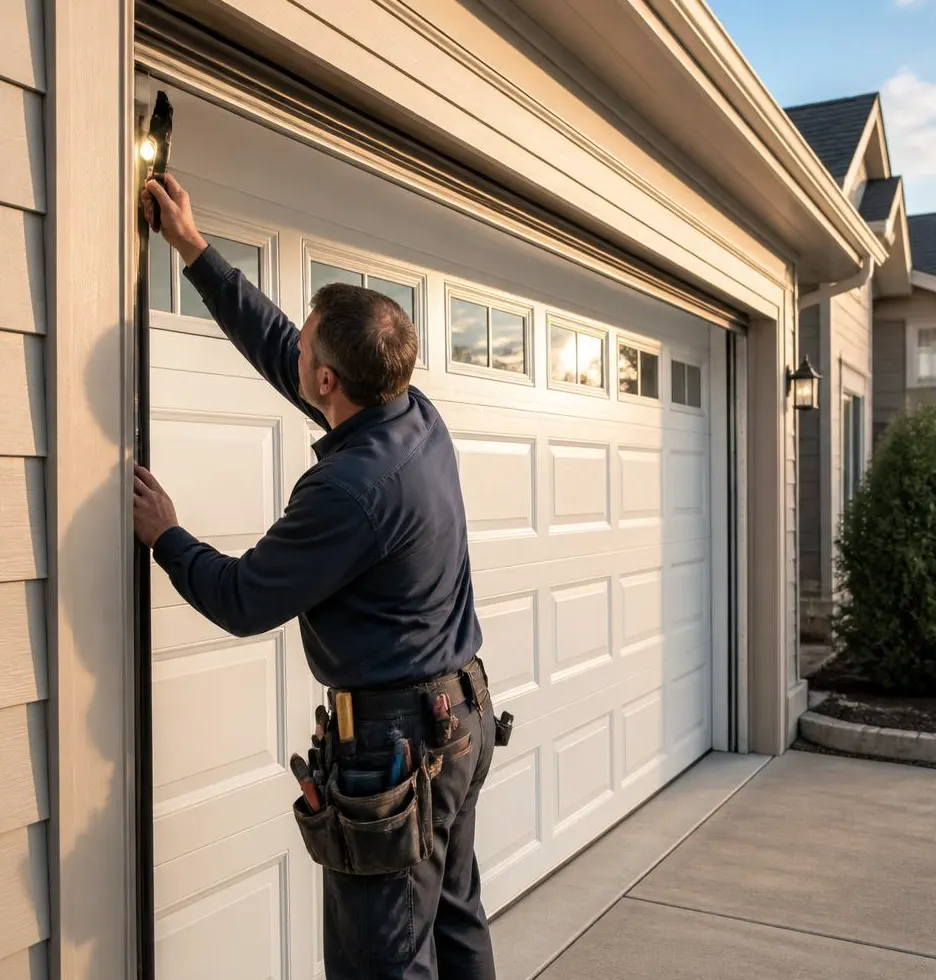
A Pre-Storm Inspection Checklist
- Check the bottom seal. Dry summer heat cracks rubber astragal seals. Press along the full width — if it's brittle or gapped, it won't stop wind-driven rain.
- Inspect tracks for bends or dust buildup. Months of dry dust and smoke residue can cake onto rollers and tracks, making the door bind under stress instead of moving smoothly.
- Test the balance. Disconnect the opener and lift the door halfway by hand. It should hold its position. A door that drifts up or crashes down means the springs are no longer matched to the door's weight, which also means they're not providing the tension that helps the door resist wind load.
- Look at the panels themselves. Older steel doors, especially single-layer (non-insulated) models, flex more under pressure than insulated or reinforced panels. Hairline dents or warping are early warning signs.
- Verify the auto-reverse safety feature. This matters less for wind directly, but a door that's been stressed structurally often develops sensor or alignment issues first.
Reinforcement Options Worth Knowing
If an inspection turns up a door that's genuinely vulnerable — older, wide, single-layer panels, or a history of track trouble — there are a few paths, each with trade-offs:
- Horizontal bracing kits bolt onto the back of existing panels to stiffen them against wind pressure. This is a lower-cost fix but doesn't address worn rollers, tracks, or springs.
- Reinforced or wind-load-rated doors are built with heavier gauge steel and additional stiffeners from the factory. These cost more upfront (national ranges for a new insulated double-car door typically run well into four figures) but hold up better over the life of the door.
- Track and roller upgrades replacing worn steel rollers with nylon ones and straightening or replacing bent track sections reduces the chance of derailment during flex, independent of panel strength.
None of these fixes matter if the springs are mismatched to the door's weight — a properly tensioned door moves and seats correctly even under stress, while an unbalanced one is already fighting itself before wind gets involved.
When to Call Patterson Garage Door
If your bottom seal is cracked, the door doesn't hold its position when lifted manually, or you've noticed daylight around the edges, it's time for a proper look before the next storm front comes through. Our team handles garage door maintenance visits that cover track alignment, seal replacement, and hardware tightening, and we do spring replacement when a door's balance has drifted out of spec. Both are far cheaper than dealing with a blown-out panel or a torn-off opener after a wind event.
If you're in Patterson, Turlock, Modesto, Newman, Gustine, Crows Landing, Westley, or Waterford and want your garage door checked before this winter's storms arrive, call Patterson Garage Door today to schedule a pre-season inspection.