
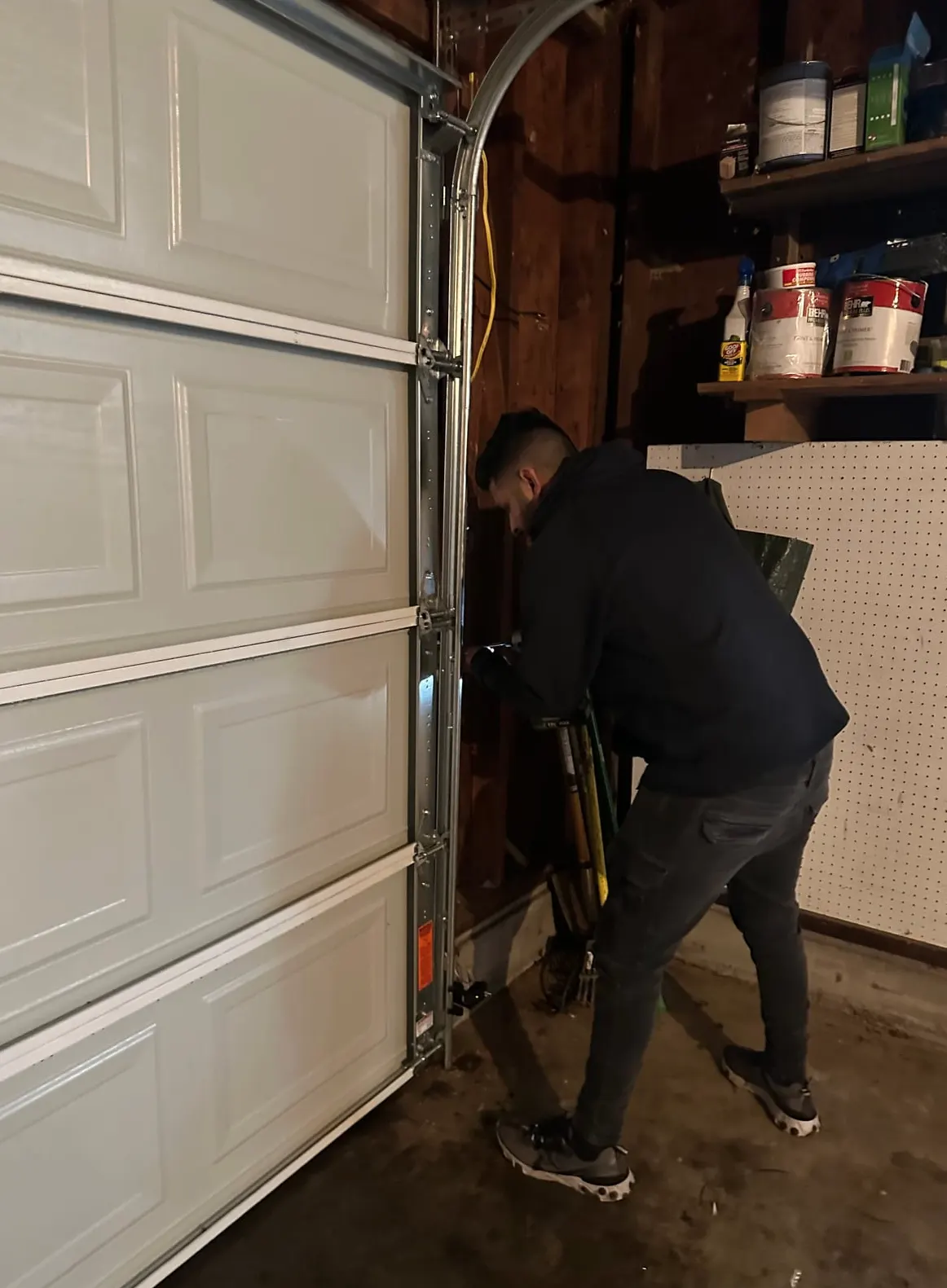
The Call That Starts This Conversation
A technician usually shows up to find the same scene: a vehicle clipped the door backing out, a basketball or errant trailer hitch left a crease, or a panel finally gave out after years of swelling and shrinking through hot dry summers and wet winters. The owner wants to know one thing — do I replace just that panel, or is it time for a whole new door? The honest answer is it depends on the door's age, how well a matching panel can be found, and what condition the rest of the door is in.
Replacing a Single Panel
Garage doors are built in sections, so in many cases a damaged panel can be unbolted and swapped without touching the rest of the door. This works best when:
- The door is a common, still-manufactured model, so a matching panel is actually available
- Only one section is damaged — not the track, rollers, or hinges around it
- The door isn't an older or discontinued style where panels have to be special-ordered or won't match in color and texture
The upside is cost and speed. A single panel swap is almost always cheaper than full replacement, and it can often be done in one visit. The downside shows up over time: a repainted or slightly different panel can be visible, especially once the original finish has faded from years of inland sun. There's also a structural question — if the impact that damaged the panel was hard enough to bend a hinge, track, or stile, a patch-and-swap won't fix the real problem, and the door may keep binding or sagging even with a new panel in place.
Replacing the Whole Door
Full replacement makes more sense when the damage is extensive, the door is older, or panel matching isn't realistic. It's also worth considering when the existing door was already underperforming — rattling in wind, poor insulation, or an opener that's been struggling against a door that's heavier or more worn than it should be.
The trade-offs here are the mirror image of panel replacement:
- Higher upfront cost, since you're paying for a complete door and often new hardware
- More labor and typically a longer install window
- But a uniform look, fresh weatherstripping, and the chance to upgrade insulation or wind resistance at the same time
For homes built with an attached garage that shares a wall with living space, replacing the whole door is also a natural point to address insulation and air sealing together, rather than patching a damaged section on an otherwise aging door.
Side-by-Side: What Actually Matters
- Cost: Panel replacement is cheaper in the short term; full replacement costs more upfront but can avoid a second repair bill later
- Appearance: Panel swaps can mismatch slightly, especially on faded or older doors; full replacement gives a uniform finish
- Structural soundness: Panel replacement doesn't fix bent track or hinges; full replacement resolves all of it at once
- Timeline: Panel repair is usually same-day; full installation takes longer to schedule and complete
- Long-term value: An older door nearing the end of its service life rarely justifies spending on a single panel if another section is likely to fail soon
What This Looks Like on a Typical Local Home
Most homes in this area have single-family garages exposed to real seasonal swings — hot, dusty summers that dry out weatherstripping and wood composite panels, followed by winter rain that swells wood and tests seals. A door that's five to eight years old with one fresh dent and otherwise tight hardware is usually a good panel-replacement candidate. A door that's older, already showing rust at the bottom panel, sagging slightly, or paired with an opener that strains to lift it is a better candidate for full replacement — patching one panel on a door that's already failing elsewhere just delays the inevitable second repair call.
Our Recommendation for Most Patterson-Area Homes
If the door is under roughly ten years old, the damage is limited to one panel, and the rest of the hardware is sound, a single-panel replacement is the practical choice. It saves money and gets the garage back in service quickly. But if the door is older, has multiple areas of wear, or the damage affected the track or frame, full replacement is usually the better long-term investment — especially heading into another wet winter where a weak seal or bent section means more exposure to blowing rain and dust.
When to Call Patterson Garage Door
If you're not sure which side of that line your door falls on, that's exactly the kind of call worth making before buying parts or guessing. Patterson Garage Door can inspect the damaged section, check the track and hinges around it, and give you a straight answer on whether Garage Door Repair with a matched panel will hold up or whether full Garage Door Installation makes more sense for the age and condition of your door. We'll also flag anything else worth addressing — worn rollers, a tired spring, or an opener working harder than it should — while we're already out there.
If you've got a dented panel, a door that's sagging, or you just want a second opinion before spending money on the wrong fix, call Patterson Garage Door. We serve Patterson, Turlock, Modesto, Newman, Gustine, Crows Landing, Westley, and Waterford, and we'll help you figure out the right call for your home.