
The Moment You See It
You hit the opener button and the door doesn't glide up smooth and even. One corner hangs lower than the other. Maybe it's stuck halfway, crooked in the opening, or there's a gap where the roller should be riding inside the track. You might hear a grinding sound, or a loud bang followed by silence. Your first instinct is to walk over and push the panel back into place, or yank the emergency release cord to free it. Don't. A garage door that's come off its track is one of the few things in your house that can seriously hurt someone in seconds, and the next few minutes matter more than you'd think.
What's Actually Happening Inside That Track
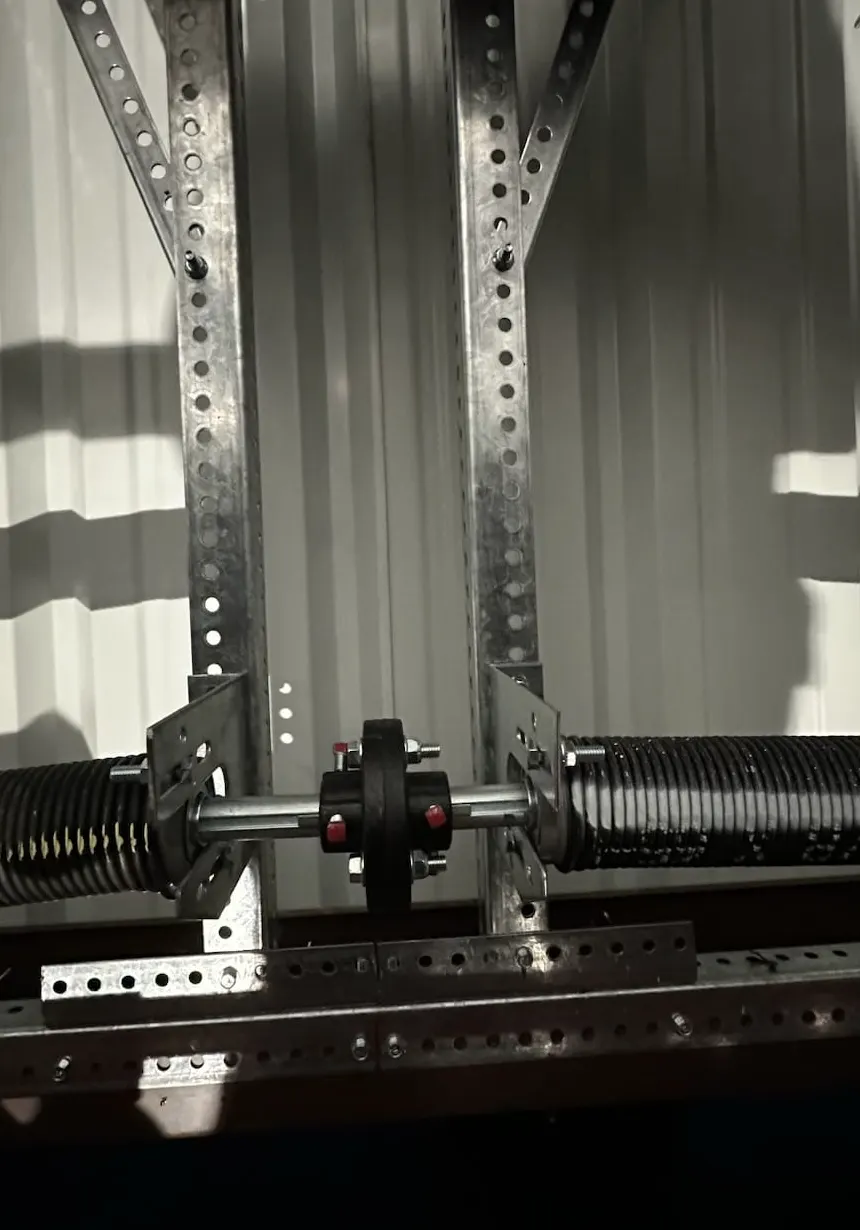
Garage doors ride on steel rollers set inside a track, held up by cables connected to a torsion or extension spring system that's carrying almost all of the door's weight. A standard double garage door can weigh 150 to 400 pounds. When a roller jumps the track, that weight is no longer evenly supported. The door is now hanging crooked, balanced on whatever's left holding it, often a single cable, a bent track section, or just friction.
This usually happens because:
- A roller wore out, cracked, or snapped off its stem
- The track got bent or knocked out of alignment, sometimes from a car bumping it, sometimes from age and repeated stress
- A cable frayed or came off its drum
- The door was forced while already misaligned, bending the track further
In older Stanislaus County homes, tracks and brackets can also shift slightly over time from seismic retrofitting work or just decades of settling, which makes an existing alignment problem worse than it looks.
How Bad This Can Get
A door that's partway off the track is not stable. If the spring is still under tension and the cable holding that side gives way, the door can drop suddenly, sometimes fast enough to cause real injury or crush whatever's underneath, including a hand, a foot, or a car hood. Torsion springs store enormous force even when the door looks still. A spring or cable that lets go under load doesn't just fail quietly, it can snap with enough force to cause cuts or worse. This is why garage door springs are consistently one of the more dangerous DIY repairs in the house, right up there with roof work.
What To Do Immediately
- Stop operating the opener. Don't press the button again hoping it corrects itself. Repeated attempts can bend the track further or snap a weakened cable.
- Keep people, kids, and pets clear of the door and anything parked underneath it. Treat the area like it's loaded, because it is.
- Leave the door exactly where it is unless it's actively falling, in which case get clear first and worry about the door second.
- Look, don't touch. Check whether the rollers are visibly off the track, whether a cable is slack or snapped, and whether the door is hanging at an angle. Take a photo if it helps you describe it later.
- If the opener is still engaged and the door is resting on the ground or fully closed and stable, it's reasonable to disconnect the opener trolley so nothing tries to pull on a damaged system again. If the door is up or hanging mid-track, leave the opener connected and just don't use it.
What Not to Touch
- Torsion springs above the door, the coiled bar near the top. These require specific tools and knowledge to handle safely, even when they look intact.
- Cables running along the tracks to the bottom corners of the door. A cable under tension can whip if it releases.
- The track itself, trying to pry or bend it back into position. It's thinner and more adjustable than it looks, and forcing it usually makes the misalignment worse.
- The door panel, trying to muscle it back onto the roller path by hand. If the spring balance is compromised, you're now holding up a few hundred pounds with your arms.
Basically, if it involves springs, cables, or forcing metal, it's not a homeowner fix. Everything else, like checking the opener, clearing the area, and leaving the door alone, is well within reason.
When to Call Patterson Garage Door
Once a door is off its track, this is a same-day call, not a wait-and-see situation. Patterson Garage Door handles exactly this kind of off-track emergency with a garage door repair visit: a technician inspects the rollers, tracks, cables, and spring tension before touching anything, realigns or replaces bent track sections, and swaps worn rollers or frayed cables so the door runs true again. If the root issue turns out to be a worn or broken spring, which is common when a door suddenly drops crooked, that's handled through a proper spring replacement with the correct size and tension for your door, not a patch job.
If your garage door has jumped its track, stop where you are and call Patterson Garage Door. We serve Patterson, Turlock, Modesto, Newman, Gustine, Crows Landing, Westley, and Waterford, and we'll get someone out to put it back where it belongs, safely.